By Clare Kutoyi, Licensed Counselling Psychologist specializing in student wellbeing and safeguarding.
Last reviewed November 2026

Teens often give in to peer pressure because being left out sets off brain systems tied to social distress and to worrying what others think. In a study of 36 recently licensed teenage boys, stronger activity in these systems during exclusion predicted riskier simulated driving a week later when a peer was in the car. It shows a link, not a cause.
Ever wondered why you sometimes give in to peer pressure, even when you don’t want to? A study of teenage boys tried to understand the science behind this. Here’s what it found, in a nutshell:
- When teens were left out, two brain systems became more active: one tied to social distress (including the anterior insula) and one tied to working out what other people are thinking (including the dorsomedial prefrontal cortex, or DMPFC).
- These brain systems keep developing through adolescence, according to earlier research the authors build on, which helps explain why teens in general are very tuned to what peers think of them and are more sensitive to rejection or heartbreak.
- Teens whose brains reacted more strongly to being excluded took more risks a week later when a peer was in the car, even after accounting for how they drove alone and for what they said about themselves.
What is peer pressure?
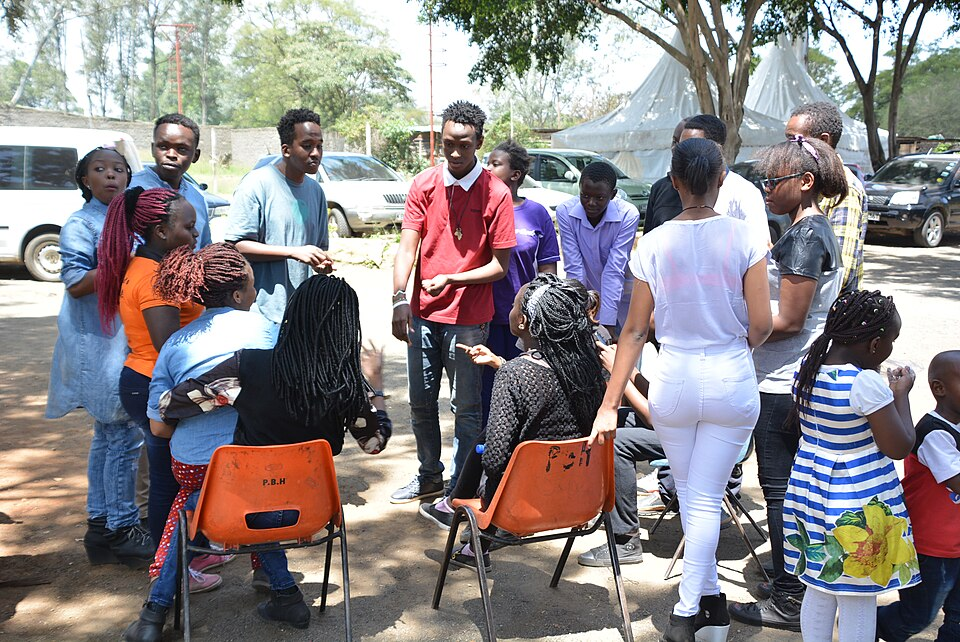
Growing up, our parents’ and teachers’ word for peer pressure was “adole”, if you know you know! They’d say “wewe adole inakusumbua” when a teenager would give in to peer pressure by acting out or falling in with questionable company. It was so quick and dismissive that we never stopped to ask why we behaved the way we did beyond “ni adole”.
Peer pressure is the social pressure to conform to a group’s behaviours and attitudes.

Obvious examples
- Everyone in your friend group shows up in the latest outfit, hairstyle or iPhone, and you feel out of place without it
- A friend threatens to end the friendship if you don’t go along with what they want
- A friend asks you to skip a family event to hang out
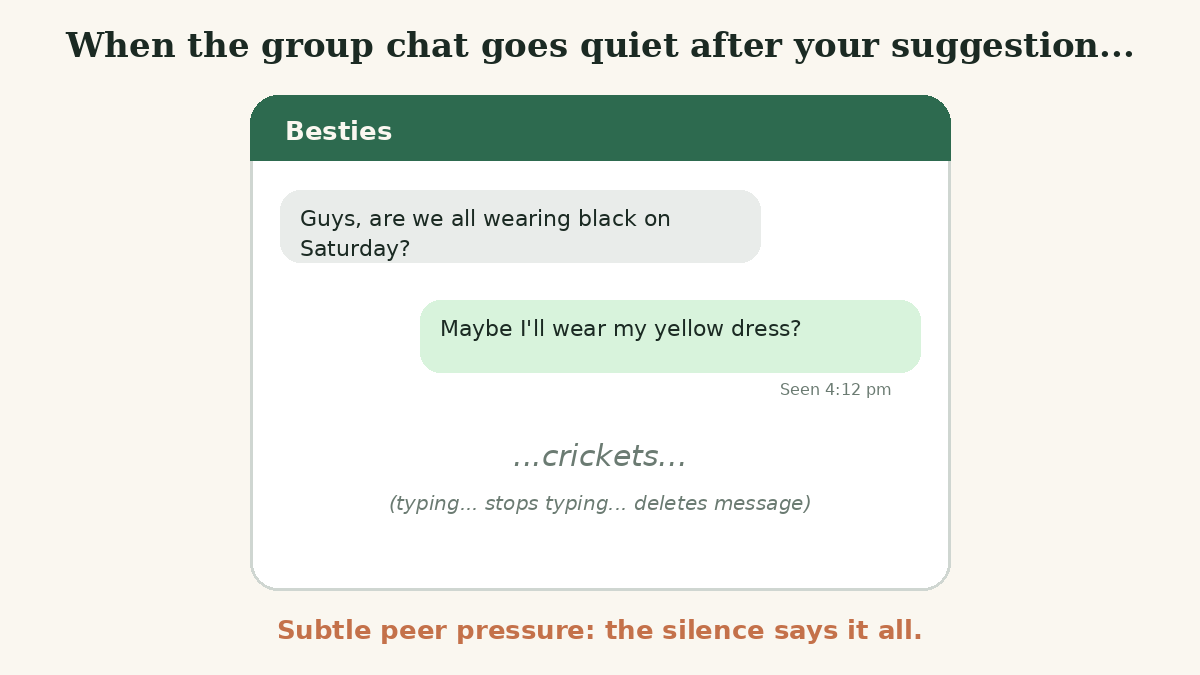
- You feel pushed to go along with a plan, opinion or outfit theme that’s popular in the group chat
Subtle signs
Peer pressure isn’t always direct or obvious. Sometimes it looks like:
- Glances that suggest disapproval
- The silent treatment, or being left on read
- Crickets when you make a suggestion or a joke they don’t like
- Being removed from the group chat with no explanation
Why do teens give in to peer pressure? What the study found
If you’ve ever thought “I knew it was wrong, but I did it anyway”, or “That outfit wasn’t my style, but I didn’t wanna be the odd one out”, or “Heh, watu watanionaje”, you’re not alone. Wanting to understand yourself is a sign of maturity, and I’m proud of you for it. Let’s get into it.
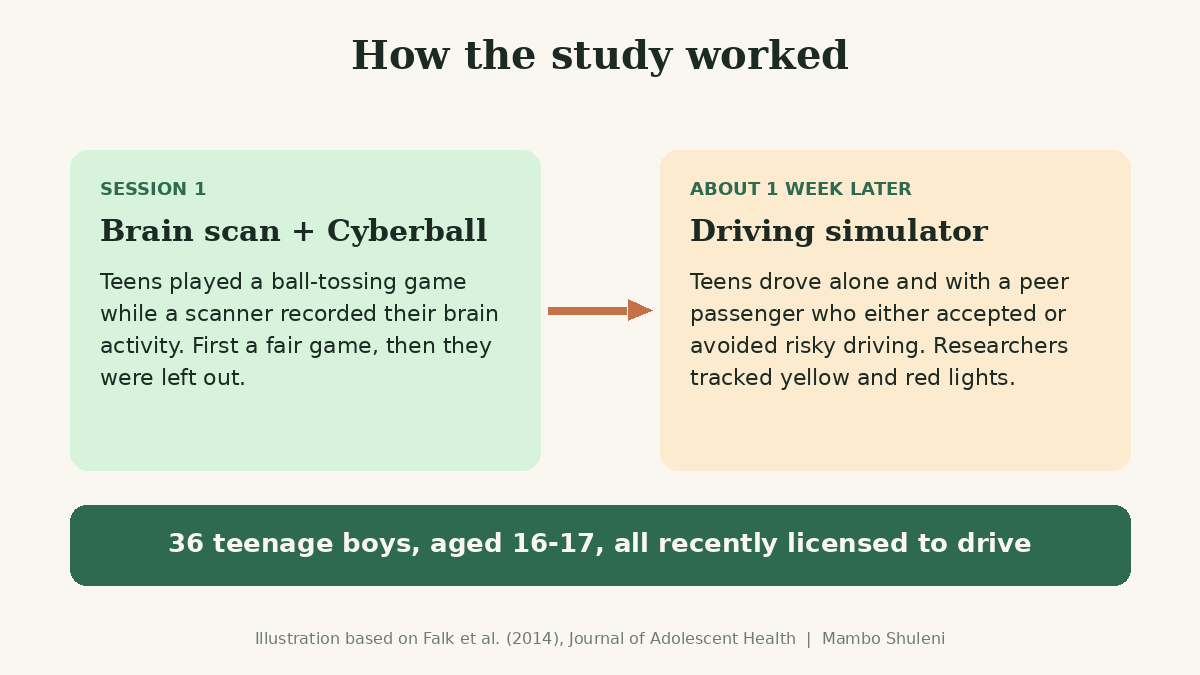
The study, by Falk and colleagues (2014, Journal of Adolescent Health), involved 36 teenage boys aged 16–17 who had all recently got their driving licenses. The researchers chose new drivers because road crashes are a leading cause of death and injury among teens, and recently licensed boys are the highest-risk group, especially with other teen boys in the car. Every teen took part in two experiments.
Experiment 1: Cyberball, simulating exclusion
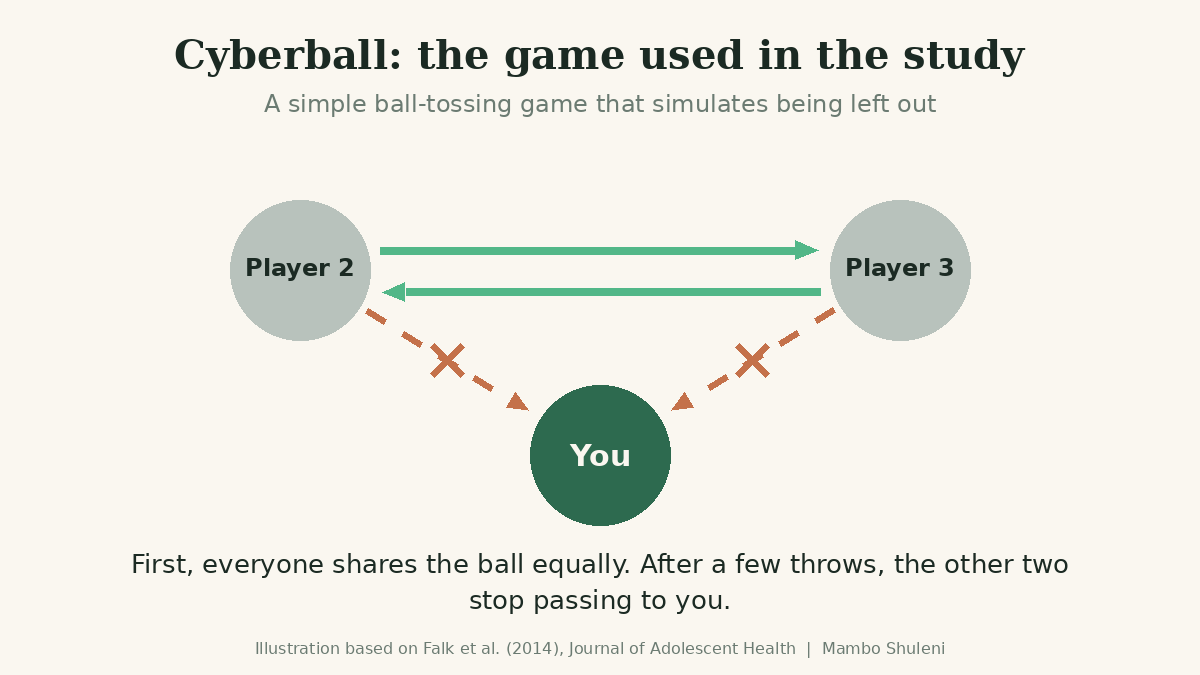
Each teen met two other young people and was told they’d play some computer games alone and some in a group with them. However, those two were actors and took no further part. Then the teen lay in a brain scanner and played Cyberball, a virtual ball-tossing game in which the other two players were controlled by a computer. The first round was fair, where everyone got the ball. In the second round, everyone threw to each other equally at first, but after a few throws the teen was left out, simulating exclusion.
After the scan, the teens filled in questionnaires about how easily they were swayed by peers, how well they resisted peer influence, and how distressed they felt during the exclusion. On average, they were like,
“I’d probably not go along with my friend’s risky behavior.”
“Nah, peer pressure doesn’t get to me.”
“Being left out was no big deal. I’m over it.”
But the scanner showed more. During the exclusion round, two brain networks were more active than during the fair round: a social pain network, including the anterior insula, and a mentalizing network used to think about other people’s minds, including the DMPFC. The anterior insula also overlaps with areas involved in physical pain, which is one reason social rejection can feel like a physical pain.
Experiment 2: the driving simulator
About a week later, the same teens drove a state-of-the-art driving simulator, once alone and once with a young male passenger. The passenger was an actor who showed either that he was into risky driving or that he wasn’t. Each drive had the same set of intersections and yellow-light situations. The researchers measured risk by how much time teens spent in the intersection after the light had turned red.
Why teens give in to peer pressure: what the study found
As a group, teens took more red-light risks with a peer in the car than alone (an average risk score of 21% versus 13%). Just having a peer there was enough, and the effect was strongest with the passenger who showed he was into risk. But some teens were swayed far more than others. Teens whose brains reacted most strongly to being excluded during cyberball took the most risks with a peer in the car, even though they drove normally when alone.
Here’s the plot twist: many teens who said peer pressure wouldn’t get to them and that being left out didn’t bother them much were more likely to take risks with a peer in the car. The authors suggest the brain measure may pick up things teens aren’t aware of, or don’t want to admit.
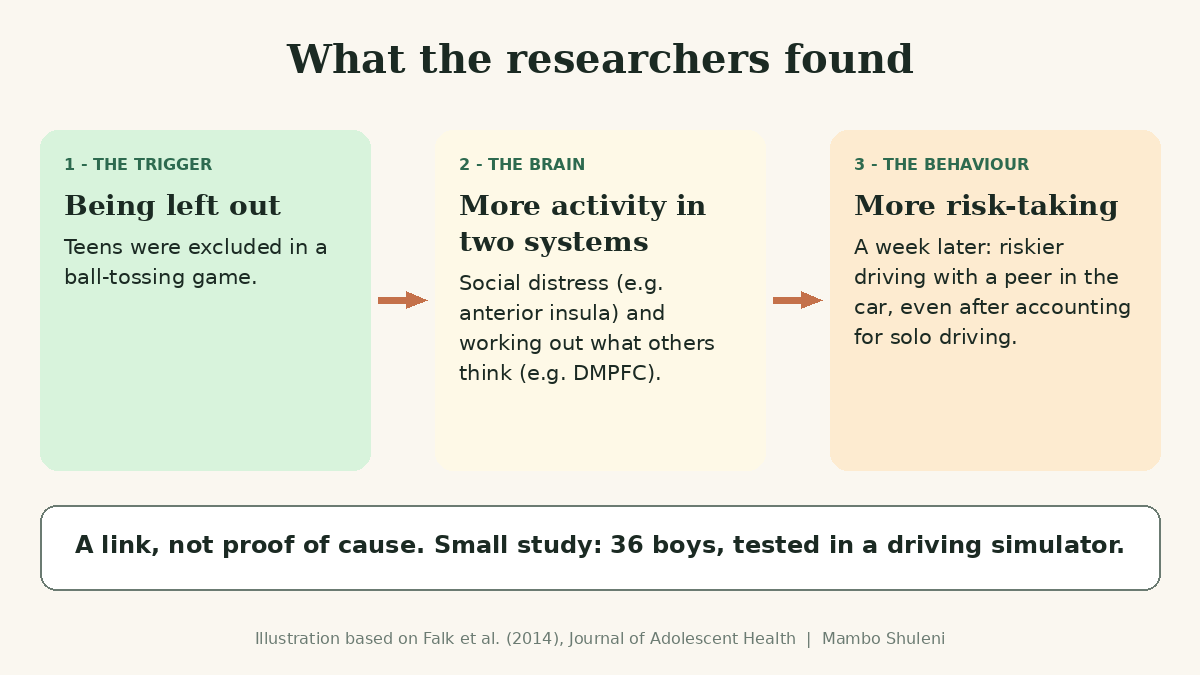
The study suggests that teens whose brains respond more to social cues during exclusion may change their behavior around peers, perhaps to avoid being excluded or to bond, whether or not the peers actively push risk. However, this study found a link, not a motive.
What does this mean for me if I give in to peer pressure?
It means that sometimes your brain’s fear of being left out can push harder than your good intentions. That doesn’t mean your brain controls you. Knowing how this works lets you pause, take a step back and choose what feels right. With practice, saying no can get easier :).
I ran a session on peer pressure a month ago with a group of teenage boys, and we ended with a finisher: each of them shared the line they would actually use to say no when they felt uncomfortable or unsure with what their friends wanted them to do. Here are some of theirs you can borrow:
“Nah, I’m good.”
“Siwezi leo, mum needs me for something.”
“Wish I could come, but that’s far from home.”
Crazy stuff, right? Lemme know in the comments below how you feel about all this, or if you have any questions, don’t hesitate to ask. I’ll answer as best as I can. Wanna learn more about how your teenage brain works or other psychological theories of peer pressure? Check out more articles below. See you on the next one!
If peer pressure is pushing you toward something unsafe, reach out for free: Childline Kenya 0800 221 234 · Befrienders Kenya +254 722 178 177 · Kenya Red Cross 1199 · Emergency 999 or 112.
Frequently asked questions

References
Falk, E. B., et al. (2014). Neural responses to exclusion predict susceptibility to social influence. Journal of Adolescent Health. Read the paper
Wasylyshyn, N., et al. (2018). Global brain dynamics during social exclusion predict subsequent behavioral conformity. Read the paper